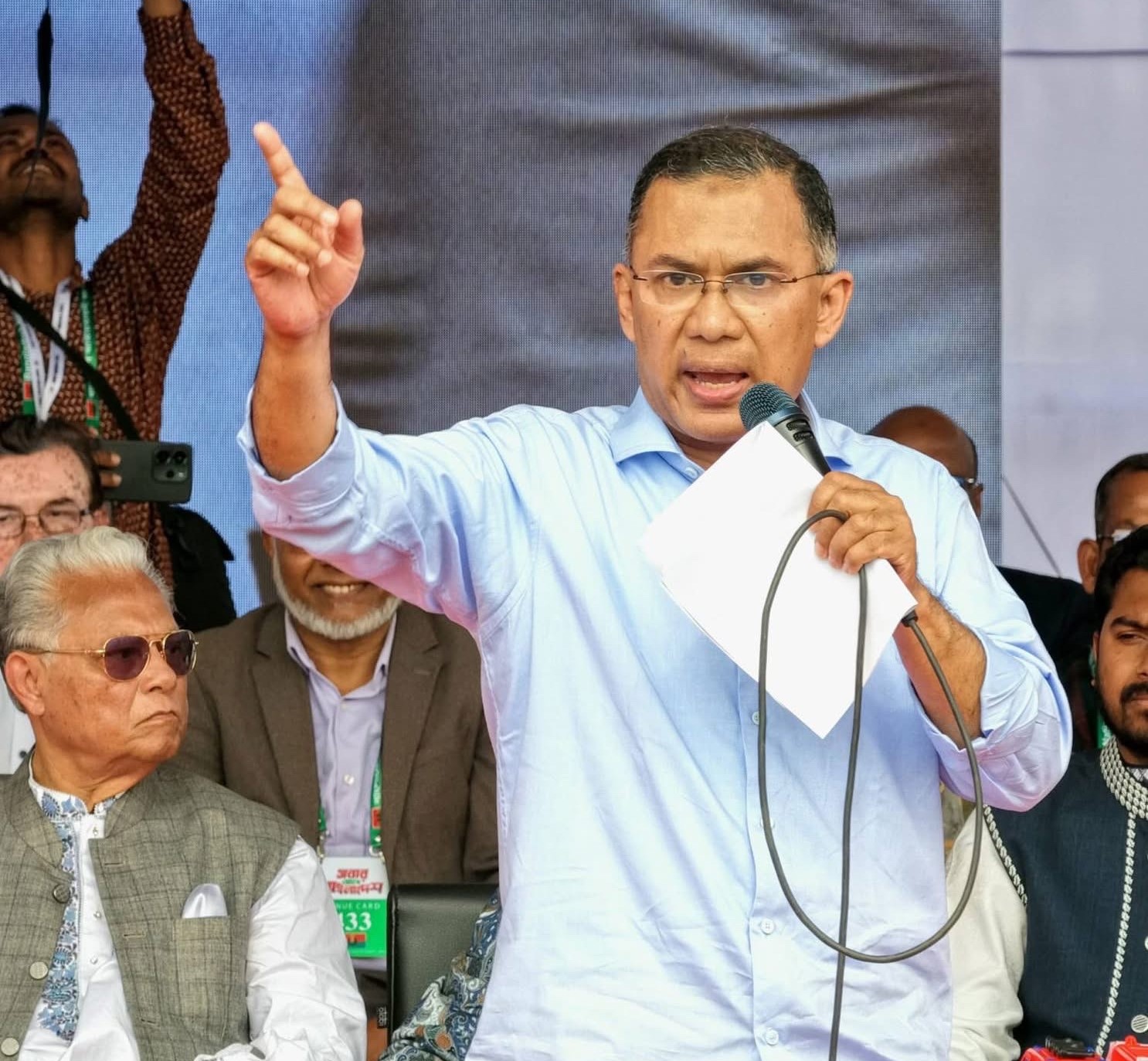
New Delhi, Feb 14 (IANS) With the recent poll verdict overwhelmingly favouring the Bangladesh Nationalist Party (BNP), and its Chairman Tarique Rahman all set to assume the office of Prime Minister, there is much interest in him as a person and politician.
Much of it has arisen due to his long absence from home, and earlier in Bangladesh, being largely involved in backroom operations.
Several video clips circulating on social media have caught him in different moods. In one, he is found telling followers not to hail him repeatedly since he does not like it. In another, he is chiding supporters for raising slogans, calling them “newcomers”, and advising them to seek the guidance of “older” BNP workers.
On another occasion, his purported carcade comes to a halt at a traffic signal, where the commentary stated that he refused to zip past despite the policeman on duty asking him to go ahead.
There is much curiosity around the eldest son of former President Ziaur Rahman and former Prime Minister Khaleda Zia. Rahman rose through party ranks in the 1990s and early 2000s, becoming a powerful behind-the-scenes operator.
After legal cases and political pressure at home, he spent roughly 17 years in exile in London, though continuing to direct party strategy and maintain influence over BNP cadres.
The 60-year-old leader’s return to frontline politics in December followed a dramatic electoral comeback for the party.
Called the “dark prince” largely due to his preference to be in the shadows, Rahman faced multiple criminal charges and convictions in Bangladesh, which his supporters describe as politically motivated and his critics cite as evidence of corruption and abuse of power.
These legal battles shaped his years in exile and remain a politically sensitive element of his public profile.
While some portray him as a decisive leader who can restore unity and revive the party, opponents label him a dynastic figure whose return risks renewed polarisation. Once he assumes office, immediate challenges will include political consolidation, diplomatic recalibration, economic stabilisation, managing fundamentalist pressure, and restoring law and order and institutional trust.
The new government needs to convert electoral victory into effective political authority while avoiding polarising moves that could provoke unrest.
Early priorities include appointing a capable cabinet, stabilising party structures after years of exile or factionalism, and signalling a commitment to inclusive governance to calm public anxieties.
Rebuilding pragmatic ties with India is an urgent diplomatic task. New Delhi has signalled readiness to engage, but it will watch Dhaka’s posture on sensitive issues such as the status of political figures in exile and further outreach to Pakistan.
At the same time, Dhaka will need to manage the pressures from Pakistan and China to redraw diplomatic links following the Muhammad Yusun-led interim government’s public overtures towards Islamabad and Beijing.
Additionally, it is yet to be seen how China reacts in future to the interim government’s trade deal with the United States.
The country’s garment and textile sector, which underpins exports and employment, faces disruption and rising competition. It is expected to find some relief with the deal.
But inflation and unemployment have eroded public patience, making economic recovery a political imperative. The health sector remains under pressure, more so after the withdrawal of USAID.
Meanwhile, the election verdict may have been against Islamist parties dominating policy, but pressure from conservative religious groups remains, especially in terms of gender and religious equality.
Another issue is the law-and-order situation since the 2024 unrest, leading to attacks on Awami League workers and the lynching of Hindus.
The incident has had a demoralising effect on the country’s police force too. The dark prince, now in the spotlight, has a long and difficult path to tread.