India Tribune Newsdesk
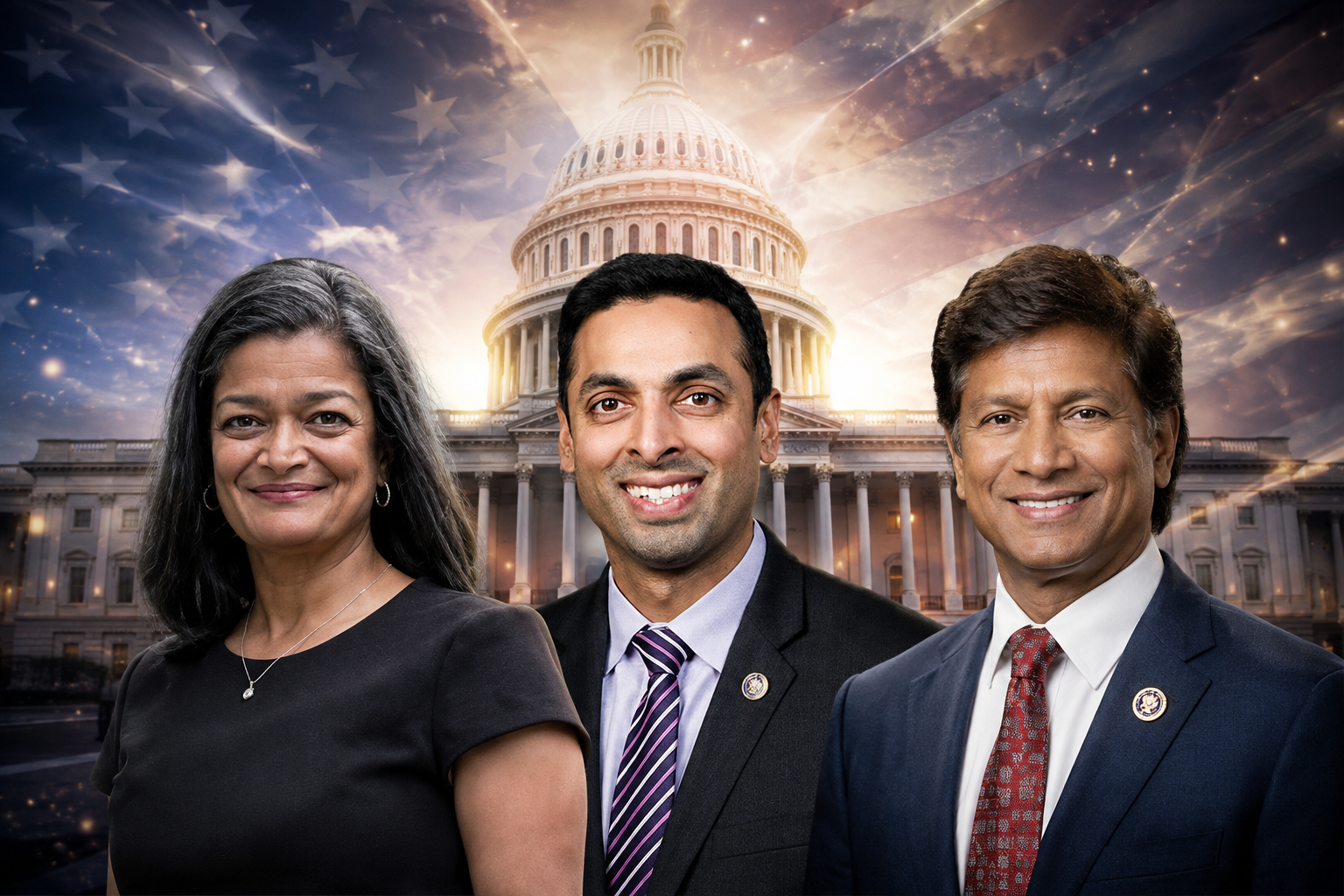
Chicago: The August 4 primary elections delivered a mixed political verdict for Indian American candidates seeking congressional office, highlighting both the growing influence of the community in U.S. politics and the increasingly competitive nature of Democratic primaries. While Congresswoman Pramila Jayapal of Washington and Congressman Suhas Subramanyam of Virginia comfortably secured their nominations for the November general election, Congressman Shri Thanedar of Michigan suffered a surprising defeat that will end his congressional career after one more term.
The results underscore the changing political landscape within the Democratic Party, where progressive organizations continue to wield significant influence in primary contests, often challenging well-funded incumbents. At the same time, the elections demonstrated that Indian Americans remain an increasingly visible force in American politics, with candidates contesting high-profile races across the country.
Washington Congresswoman Pramila Jayapal recorded one of the strongest victories of the night, cruising to renomination in the state's 7th Congressional District. Seeking her sixth term in the U.S. House of Representatives, Jayapal captured more than 83 percent of the vote, receiving over 104,000 ballots in the top-two primary system used in Washington State. She will now face Republican candidate Nirav Sheth in the November 3 general election, after Sheth secured approximately 10 percent of the primary vote.
Representing Seattle and surrounding communities since 2017, Jayapal remains one of the Democratic Party's most recognizable progressive leaders. Following her overwhelming victory, she thanked voters, volunteers and grassroots organizers for their support and described the election as a mandate for continuing her advocacy on behalf of working families.
"This campaign has always been about more than one election," Jayapal wrote after her victory. "It's about building lasting power for working families, protecting our democracy, and ensuring every voice is heard." She reaffirmed her commitment to lowering the cost of living, expanding affordable health care, increasing housing access, protecting reproductive rights, reforming immigration laws and reducing the influence of corporate money in politics. She also reiterated her belief that federal resources should focus on domestic priorities rather than prolonged overseas military engagements.
Jayapal, who made history in 2016 as the first South Asian American woman elected to the U.S. House of Representatives, enters the general election as the overwhelming favorite in one of Washington's safest Democratic districts.
In Virginia's 10th Congressional District, Congressman Suhas Subramanyam faced no opposition in the Democratic primary and advanced directly to the November general election. He will meet Republican nominee Dave Beckwith, who won a contested Republican primary with more than 72 percent of the vote.
Subramanyam, who entered Congress in January 2025, has quickly established himself as one of the Democratic Party's emerging leaders. Before his election to Congress, he served in both the Virginia House of Delegates and the Virginia Senate, where he sponsored legislation aimed at reducing prescription drug costs, lowering utility bills and tolls, improving education and enhancing public safety. He also co-founded a bipartisan caucus while serving in the state legislature.
Following the primary, Subramanyam emphasized that Democrats must regain control of the House of Representatives. In remarks posted after the election, he criticized congressional Republicans for failing to provide sufficient oversight of President Donald Trump and argued that current policies have increased costs for American families while weakening the federal workforce. He pledged to build a broad coalition across Northern Virginia to keep the district in Democratic hands while helping strengthen Democratic prospects statewide.
Unlike Jayapal and Subramanyam, Michigan Congressman Shri Thanedar experienced the biggest setback among Indian American candidates. Seeking a third term in Congress, Thanedar narrowly lost the Democratic primary in Michigan's 13th Congressional District to State Representative Donavan McKinney, who defeated the incumbent by approximately 4,200 votes. Because the district strongly favors Democrats, McKinney is widely expected to win the November general election, effectively ending Thanedar's congressional tenure.
Thanedar graciously conceded defeat, congratulating McKinney on a hard-fought campaign. Reflecting on his service, he called it "the honor of my life" to represent Michigan's 13th District. During his tenure, he highlighted resolving more than 4,300 constituent service cases and securing approximately $45 million in federal funding for projects throughout the district. He pledged to continue serving constituents through the remainder of his term before leaving office.
McKinney's victory reflected the growing strength of progressive activists within the Democratic Party. His campaign received significant support from Justice Democrats, which reportedly invested nearly $1 million in the race, making it one of the organization's highest-profile efforts during this election cycle. He also secured endorsements from several progressive members of Congress, including members of the Congressional Black Caucus.
Campaigning as a Democratic Socialist, McKinney promoted an agenda that included Medicare for All, a Green New Deal, universal child care, expanded labor protections, environmental justice and ending U.S. military aid to Israel. Throughout the campaign, he argued that voters wanted leaders willing to challenge the political establishment and frequently linked economic concerns in Detroit to broader federal spending priorities.
Thanedar, meanwhile, relied heavily on his personal wealth to finance his campaign and received endorsements from prominent Democratic leaders, including House Minority Leader Hakeem Jeffries and Representatives Bennie Thompson and Cleo Fields. Nevertheless, he faced criticism from some Democrats over his unsuccessful attempt earlier this year to force a House vote on impeaching President Donald Trump, an effort he eventually withdrew.
According to additional reports, Thanedar's defeat also reflected a broader surge by progressive candidates in Michigan. Democratic Socialist Donavan McKinney benefited from endorsements by Senator Bernie Sanders, Representative Rashida Tlaib and other progressive leaders, while issues related to Israel and the Middle East played a significant role in the campaign. Thanedar, who had previously belonged to the Democratic Socialists before leaving the organization following the Hamas attack on Israel, nevertheless shared several progressive policy positions with McKinney, including opposition to the Iran war and support for expanded government-funded health care.
The Michigan results also highlighted another trend within the Democratic Party. Progressive physician Abdul El-Sayed captured the Democratic primary for the U.S. Senate, defeating a more moderate opponent and positioning himself to become the first Muslim elected to the U.S. Senate if successful in November.
The losses of Thanedar and, earlier this year, Illinois Congressman Raja Krishnamoorthi's unsuccessful campaign for the Democratic Senate nomination mean that the number of Indian Americans in Congress could temporarily decline. However, Arizona Democrat Amish Shah remains in contention after winning his Democratic primary and could add another Indian American voice to Congress if successful in November.
Taken together, the primary results present a picture of both opportunity and challenge for Indian American political leaders. Established incumbents like Pramila Jayapal continue to enjoy overwhelming support in their districts, while rising figures such as Suhas Subramanyam are building their national profiles. At the same time, Shri Thanedar's defeat serves as a reminder that incumbency alone is no guarantee of political survival in an era when ideological movements and energized grassroots organizations are reshaping Democratic politics. As the general election approaches, Indian American candidates will remain prominent participants in several key congressional races, reflecting the community's expanding influence in shaping America's political future.
(With the input of News Dispatches)