By Manu Gaur
New Delhi, May 24 (IANS) While Uttarakhand became the first state in the country on January 27, 2025, to implement the Uttarakhand Uniform Civil Code Act 2024, with the objective of ensuring equal rights for women across all sections of society, the state government simultaneously discontinued religion-based personal civil laws.
In doing so, it also addressed practices considered detrimental to women's dignity i.e child marriage, polygamy, triple talaq, halala, iddat etc.
As a member of the Expert Committee constituted for the Uniform Civil Code, it has been a privilege to contribute to this historic initiative in formulating legislation aimed at securing equal rights for women and addressing inequalities existing across different communities.
Upon completion of the work relating to the Uniform Civil Code, on June 5, 2025, the Uttarakhand government constituted a Strategic Advisory Committee under the chairmanship of the Chief Minister Pushkar Singh Dhami.
In the very first meeting of this Committee, several policy matters concerning the interests of the state were deliberated upon.
Foremost among these was the necessity of establishing a framework for imparting high-quality modern education to future generations.
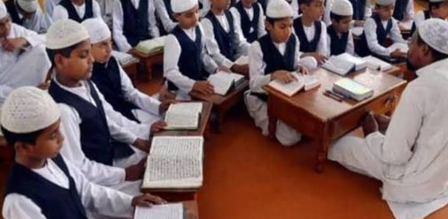
In this context, a suggestion put forward by me was accorded priority by the Committee: that special emphasis must be placed on ensuring access to quality education for children belonging to sections where educational deprivation is most pronounced -- particularly those receiving limited exposure to modern education within madrasas under the framework of religious instruction (Deeni Taleem).
This issue was also discussed on multiple occasions with IPS officer Abhinav Kumar, drawing from his experiences during his tenure with the Border Security Force (BSF) and Indo-Tibetan Border Police (ITBP) in Jammu and Kashmir; the shared view was that achieving long-term social harmony would remain challenging without substantive reforms in minority education.
Following the consensus reached within the Committee, the Member Secretary and IAS officer Shatrughna Singh (former Chief Secretary of Uttarakhand), and I initiated a detailed study of the prevailing legislative framework in Uttarakhand, specifically, the Uttarakhand Madrasa Education Board Act, 2016, and the Uttarakhand Non-Government Arabic and Persian Madrasa Recognition Regulations, 2019.
Simultaneously, detailed information regarding the operational status of madrasas in the state was sought from the Uttarakhand Madrasa Board Chairman, Mufti Shamoon Qasmi, and the Special Secretary of the Department of Minority Welfare and IFS officer, Parag Madhukar Dhakate.
The study indicated that a substantial number of madrasas were operating without formal recognition from the State Madrasa Board; even among recognised institutions, the standard of education was often found to be limited.
In many such institutions, teaching personnel did not meet the minimum prescribed qualifications. It was further observed that only a small proportion, nearly 2 to 4 per cent of school-going Muslim students were enrolled in madrasas.
The root causes of the backwardness within the Muslim community and the radicalism prevalent therein become evident from the fact that such children educated in madrasas go on to lead the Muslim community in future.
Consequently, this has compelled us to reflect on the kind of citizens we desire from the Muslim community in the future: IAS and IPS officers, doctors, and engineers or mullahs and maulvis who propagate radicalism and hatred? Therefore, it became imperative to undertake comprehensive reforms in the standard of education provided in madrasas, while strictly adhering to the special privileges accorded to minorities under the Indian Constitution.
Although the Constitution of India, particularly Articles 29 and 30, confers special rights upon religious and linguistic minorities to preserve their identity, culture, and educational autonomy, it does not explicitly define which communities qualify as "minorities".
To address this, the National Commission for Minorities Act, 1992, was enacted, under which Muslims, Christians, Sikhs, Buddhists, and Parsis were notified as minority communities in 1993; subsequently, in 2014, Jains were also included within this category.
Thus, at present, six communities are entitled to the protections envisaged under Articles 29 and 30. However, various states have enacted their laws for specific institutional frameworks primarily for madrasas only.
In line with Constitutional principles, it was therefore considered appropriate that the right to establish and administer minority educational institutions be uniformly available to all recognised minority groups.
To this end, it was considered essential to examine authoritative judicial pronouncements interpreting minority rights.
A detailed study of judgments of the Supreme Court, particularly T.M.A. Pai Foundation vs State of Karnataka; and P.A. Inamdar vs State of Maharashtra provided important guidance.
In T.M.A. Pai, an eleven-judge Constitution Bench affirmed that the right of minorities to establish and administer educational institutions is a fundamental right, subject only to reasonable regulations aimed at maintaining academic standards, provided the minority character of the institution is not undermined.
In P.A. Inamdar, the Court further held that the State cannot impose reservation policies on private minority institutions and that such institutions retain autonomy in matters relating to admissions and fee structures.
On the basis of these studies, it was concluded that there existed a need in Uttarakhand to enact a new, Constitutionally sound legislation to promote quality modern education among all minority communities, while repealing the existing legal framework governing madrasas.
Accordingly, after due deliberation and with careful attention to constitutional principles, the Uttarakhand Minority Educational Institutions Bill, 2025, was drafted and placed before the Committee.
The Committee's Chairman, Chief Minister Pushkar Singh Dhami, with the concurrence of other members -- including Chief Secretary Anand Vardhan, former Chief Secretary Indu Kumar Pandey, former IAS officer Rakesh Kumar, and Principal Secretary Planning Meenakshi Sundaram -- directed the Special Secretary of Department of Minority Welfare and IFS officer, Parag Madhukar Dhakate, to place the Bill before the Cabinet.
Despite certain objections raised by some bureaucrats without detailed knowledge about the subject, the Cabinet approved the proposal on August 17, 2025, for introduction in the Legislative Assembly.
The Bill was subsequently passed by the Uttarakhand Legislative Assembly on August 20, 2025, thereby becoming the Uttarakhand Minority Educational Institutions Act, 2025, marking a significant legislative development in the field of minority education.
The Act clearly defines a "Minority Educational Institution" as one established and administered by a notified minority community. It does not interfere with the administrative autonomy, management, or internal functioning of such institutions; rather, the role of the State is confined to ensuring academic standards, transparency, and student welfare.
The Act further provides that no discrimination shall be made in the grant of recognition or financial assistance on the basis of minority status of the institution.
For effective implementation, a state-level authority namely, the Uttarakhand State Minority Education Authority has been constituted.
Consequently, the earlier madrasa-related laws shall stand repealed from July 1, 2026, following the completion of the academic session.
In furtherance of the objective of promoting quality modern education, the Authority grants recognition to institutions as "Minority Educational Institutions" subject to specific conditions: the institution must be established and administered by a minority community; it must be affiliated with the Uttarakhand Board of School Education; and it must be managed by a duly registered Society, Trust, or Section 8 Company under the relevant statutes, including the Societies Registration Act, 1860, the Indian Trusts Act, 1882, or the Companies Act, 2013.
The land must be owned or legally leased in the name of the institution; financial transactions must be conducted through a formal banking channel; and the governing body must consist wholly or predominantly of members of the concerned minority community.
The institution must clearly articulate its objectives as serving the interests of the concerned minority community; and no student or employee of such institution is compelled to participate in religious activities without her/his wish. Teacher appointments must meet prescribed qualifications, and all academic, administrative, and financial regulations issued by the Authority must be complied with.
Additionally, a minority educational institution shall not do anything that creates an obstacle in the path of communal and social harmony.
Upon recognition, such institutions may impart supplementary religious education alongside the prescribed academic curriculum, subject to standards determined by the Authority. They may also conduct examinations and issue certificates in respect of such supplementary subjects, in addition to those issued by the recognised Uttarakhand Board of School Education.
In conclusion, the Uttarakhand Minority Educational Institutions Act, 2025, represents a significant legislative initiative aligned with the constitutional philosophy of India.
It not only safeguards the educational rights of minorities but also operationalises the principles laid down in judicial precedents i.e. T.M.A. Pai and Inamdar within the framework of modern, quality education.
With effective implementation consistent with constitutional principles and judicial guidance, the Act has the potential to ensure stability, autonomy, and improved educational standards in the domain of minority education.
(The author is an expert committee member of Uniform Civil Code in Uttarakhand and also serves as a member of state government's strategic advisory committee. The views expressed in above article are the author's own)